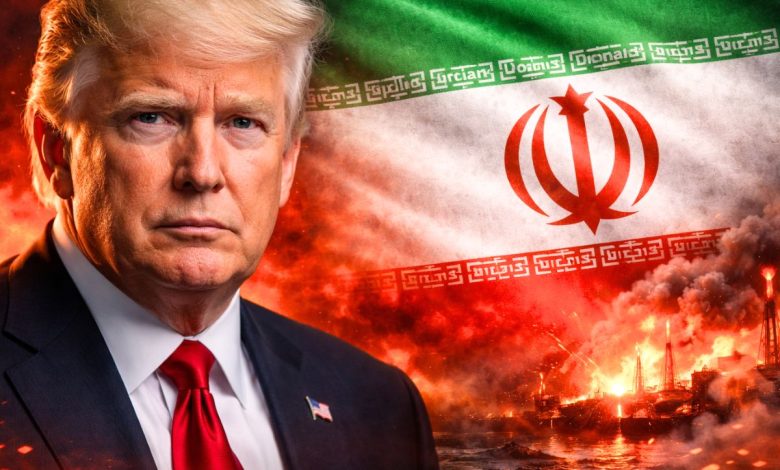
Iran’s Islamic Revolutionary Guard Corps has appealed directly to the American public to pressure the United States government to end its military campaign against Iran, accusing Washington of actions that Tehran considers war crimes.
The appeal comes as the conflict continues to fuel tensions across the Middle East, with both Washington and Tehran trading accusations over military operations, civilian casualties and alleged violations of international law.
The IRGC’s latest message also comes amid growing international scrutiny of U.S. military strikes in Iran and their reported impact on civilians.
A United Nations fact-finding mission said there were reasonable grounds to believe that U.S. strikes on a school in Minab and a sports facility in Lamerd violated international humanitarian law.
The mission said more than 150 people, including at least 120 children, were killed in the Minab school strike, while another 22 civilians were reportedly killed or injured in the Lamerd attack.
The UN findings do not constitute a criminal court judgment, but the investigators said the evidence could potentially contribute to future accountability proceedings.
Washington has rejected allegations of wrongdoing while pointing to alleged abuses by Iranian authorities. The same UN fact-finding mission accused Iran’s authorities of crimes against humanity during the crackdown on nationwide protests, citing alleged unlawful killings, torture and arbitrary detention.
Meanwhile, military tensions between the United States and Iran remain high, with the Strait of Hormuz continuing to be a major flashpoint.
The strategic waterway has been at the centre of the conflict, with disruptions to shipping affecting global energy markets. Recent fighting has included attacks involving oil tankers and other vessels in and around the strait.
Despite the continuing confrontation, diplomatic efforts have remained active.
Iranian Foreign Minister Abbas Araghchi recently presented a seven-day roadmap aimed at ending the conflict.
Under Tehran’s proposal, Iran would reopen the Strait of Hormuz and resume negotiations over its nuclear programme if Washington met a series of conditions, including lifting its naval blockade and easing sanctions on Iranian oil exports.
The proposal was conveyed through mediators, including Qatar, as both sides explored a possible route back to negotiations.
However, significant differences remain over the terms of any potential agreement, with Washington maintaining concerns over Iran’s nuclear programme and regional activities.
The IRGC has continued to maintain a firm military position even as diplomatic contacts continue. On September 29, an IRGC spokesperson accused U.S. President Donald Trump of misleading Americans over Iran’s nuclear ambitions and disputed Washington’s claims concerning control of the Strait of Hormuz.
The latest appeal to Americans therefore adds a political dimension to Iran’s broader effort to challenge Washington’s military campaign and shape public opinion in the United States.
For now, the conflict remains marked by a combination of military confrontation, economic pressure and diplomatic manoeuvring, while international attention continues to focus on civilian protection, accountability and prospects for a negotiated settlement.